
Termites are often called the "silent destroyers", and in Australia, that reputation is well earned. By the time most homeowners notice something is wrong, an active colony has usually been feeding on the structural timber of their property for months, sometimes years. The damage is hidden inside walls, beneath floors, and within roof voids, quietly compromising the very framework that holds a home together.
The numbers are sobering. Termites are estimated to cause more than $1.5 billion in property damage across Australia every year. Surveys consistently suggest that roughly one in three unprotected homes will experience some form of termite attack during its lifetime. In high-risk regions such as Sydney, that figure climbs even higher. Worse still, standard home and contents insurance policies almost never cover termite damage, because it is classified as a preventable maintenance issue rather than a sudden event.
Key Takeaways
- Huge Annual Cost: Termite damage costs over $1.5 billion annually in Australia and standard home insurance policies exclude it completely.
- High Suburban Risk: 1 in 3 unprotected properties in Australia will experience termite attacks, with Sydney facing elevated threats.
- Annual Checks are Mandatory: Australian Standard AS 3660 recommends professional inspections at least once every 12 months (or every 6 months in high-activity areas).
- Spot the Signs: Look out for hollow-sounding timber, mud shelter tubes on foundations, sticking doors or windows, and discarded insect wings.
- Cost-Effective Defence: A professional termite inspection costing $250 to $450 is a fraction of the cost of structural repairs, which frequently exceed $100,000.
Table of Contents
- 1. What Is a Termite Inspection?
- 2. Why Termite Inspections Are Important
- 3. Are White Ants the Same as Termites?
- 4. Signs You May Need an Inspection
- 5. Identifying Damage Behind Walls & Floors
- 6. Termite Damage vs Wood Rot
- 7. Where Termites Commonly Hide
- 8. What Happens During an Inspection?
- 9. Termite Inspection Costs in 2026
- 10. How Often Are Inspections Needed?
- 11. Pre-Purchase Termite Inspections
- 12. Annual Termite Inspections
- 13. Common Causes of Infestations
- 14. What a Report Includes
- 15. DIY vs Professional Inspections
- 16. Common Mistakes Homeowners Make
- 17. Termite Prevention Tips
- 18. Frequently Asked Questions
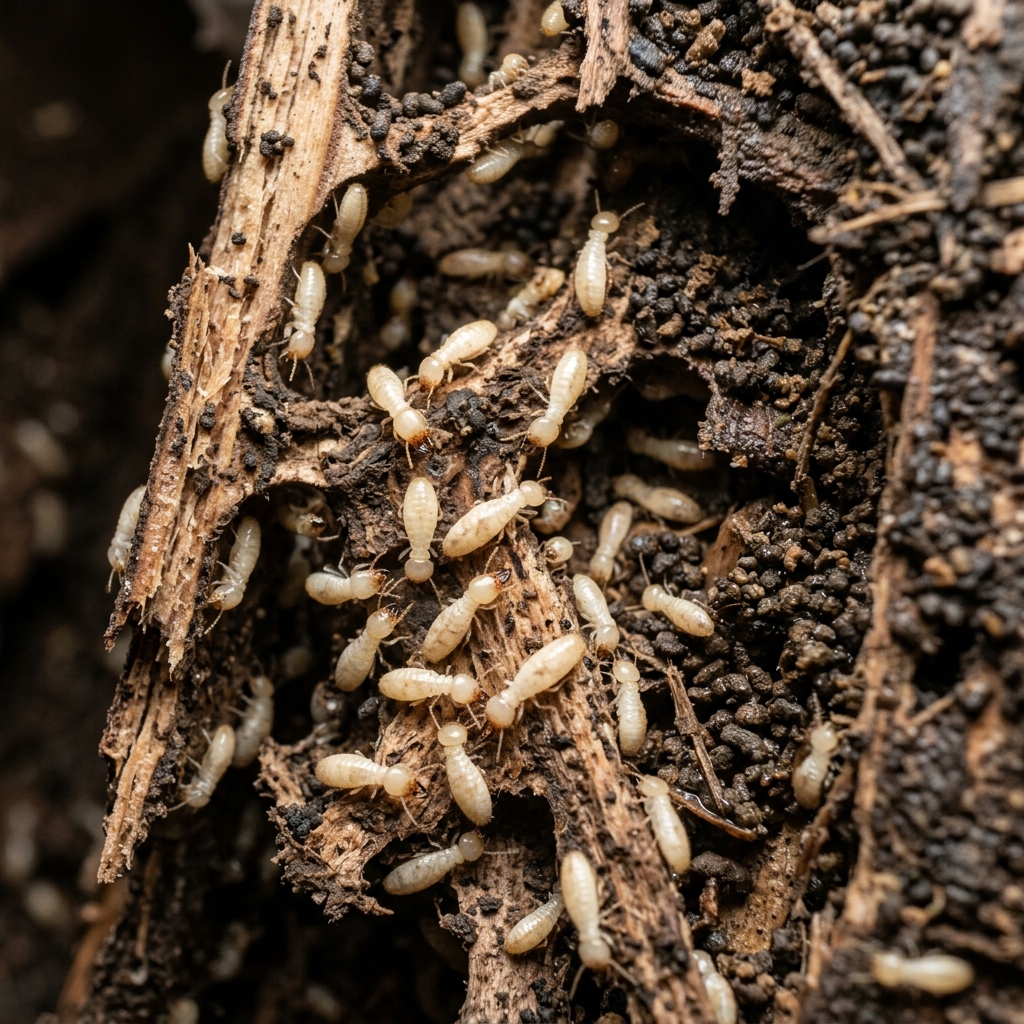
Active termites feeding inside a damaged structural timber beam, representing the hidden activity a professional inspection is designed to uncover.
1. What Is a Termite Inspection?
Quick Definition:
A termite inspection is a full visual and technology-aided check of a home or business property to find active termites, past activity, damage to timber, and conditions that make a building vulnerable. Done by a licensed timber pest technician, it targets structural areas including roof voids, subfloor zones, internal framing, and the building's exterior perimeter.
A professional termite inspection is a highly systematic assessment carried out under national guidelines. In Australia, the core standard for a pre-purchase timber pest inspection is AS 4349.3. This defines exactly what must be checked, what technology is required, and how the results must be reported. Subsequent prevention and management systems (like chemical barriers or monitoring stations) are governed under AS 3660.
When engaging a pest controller, it is essential to understand the difference between various services:
| Service Type | What is Covered |
|---|---|
| Termite (Timber Pest) Inspection | Complies with AS 4349.3 or AS 3660. Covers termites, borers, wood rot, fungal decay, and structural dampness in all accessible areas. |
| General Pest Control Inspection | A standard visual check for common household pests like ants, spiders, and cockroaches. Usually does not cover structural timber damage. |
| Combined Building and Pest Inspection | Combines a structural building report (done by a builder) with a timber pest inspection report (done by a licensed pest controller). Common for real estate buying. |
Always ensure your inspector holds a current state licence with a specific timber-pest endorsement. Technicians affiliated with the Australian Environmental Pest Managers Association (AEPMA) follow industry codes of best practice, providing a reliable standard of care and professional indemnity insurance coverage.
2. Why Termite Inspections Are Important
The primary reason to get a professional termite inspection is that early detection stops catastrophic damage before it starts. A standard timber-framed home can suffer major structural damage within a few months of a colony entering the walls. Because subterranean termites chew through softwood framing behind drywall, a house can appear completely fine on the surface while being eaten from the inside out.
On top of that, standard home insurance policies do not cover termite damage. Insurance companies view termites as a preventable maintenance issue rather than an unexpected event. That means if termites compromise your roof structure or subfloor, you must pay out-of-pocket for all structural rebuilds. Regular inspections provide the paper trail showing you took reasonable precautions, which is also necessary to keep home pest barriers and building warranty policies active.
3. Are White Ants the Same as Termites?
This is a common point of confusion for Australian property owners. Yes, the term "white ants" is simply an everyday Australian nickname for termites. If you hear neighbours, builders, or pest control companies use the term white ants, they are referring directly to termites.
However, termites are not ants at all. Biologically, termites are closely related to cockroaches and sit in the order Blattodea, whereas ants belong to the order Hymenoptera (sharing lineage with bees and wasps). Misidentifying termites as simple ants is a costly mistake, because standard ant sprays will not touch a termite colony and will only make them scatter to other areas of the house.
Here is how to tell them apart:
- Body Shape: Ants have a distinct pinched waist separating their segments. Termites have a straight, broad waist with no separation.
- Antennae: Ant antennae are bent or elbowed. Termite antennae are straight, looking like a series of tiny beads.
- Wings: Flying ants have wings of unequal sizes (the front pair is larger). Swarming termites (alates) have four wings of equal size and length.
- Colour: Ant workers are usually black, brown, or red. Termite workers are pale, creamy-white, and translucent.
4. Signs You May Need a Termite Inspection
Common Warning Signs of Termite Activity:
- Hollow or papery-sounding skirting boards and timber trim.
- Mud shelter tubes built along concrete foundation walls and brick piers.
- Sagging cornices, bulging wall paint, or springy, soft floors underfoot.
- Doors and window frames that suddenly jam or stick.
- A scatter of discarded, equal-length insect wings near doors and windows.
- Faint clicking or chewing noises inside wall cavities when a room is quiet.
Because subterranean termites must maintain high moisture levels to survive, they build protective structures out of soil, saliva, and organic matter. These are known as mud shelter tubes. If you spot these running up brick foundations, piers, or timber retaining walls, it is an immediate sign of termite activity.
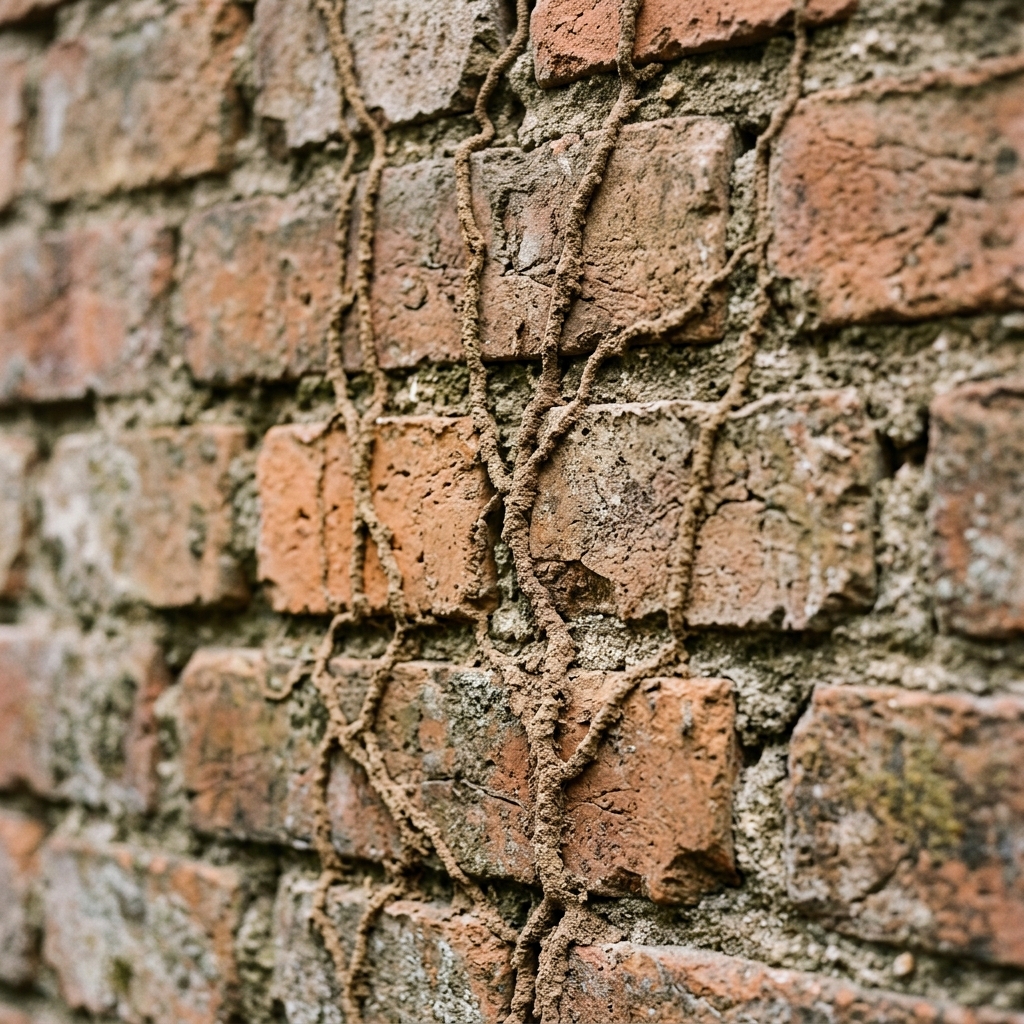
Branching mud tubes made of soil and saliva running vertically up a weathered brick foundation wall, providing shelter for termites as they travel from soil to timber structures.
Another key indicator is the swarming of reproductive termites, called alates. This usually happens on warm, humid spring and summer afternoons. Once they land, they discard their wings. Finding a pile of small, clear wings on windowsills, porches, or spiderwebs indicates that a colony has reached maturity nearby and is looking to build new nests.
5. Identifying Damage Behind Walls & Floors
Because termites avoid light, they are rarely seen walking in the open. They feed behind the plasterboard, under floor joists, and inside subfloor framing. As they chew the soft interior wood, they leave a paper-thin outer veneer of paint or wood.
Homeowners can check for hidden damage by tapping skirting boards, window architraves, and door frames with a solid object. If the timber sounds hollow, papery, or crumbles easily under light pressure, it is likely infested.
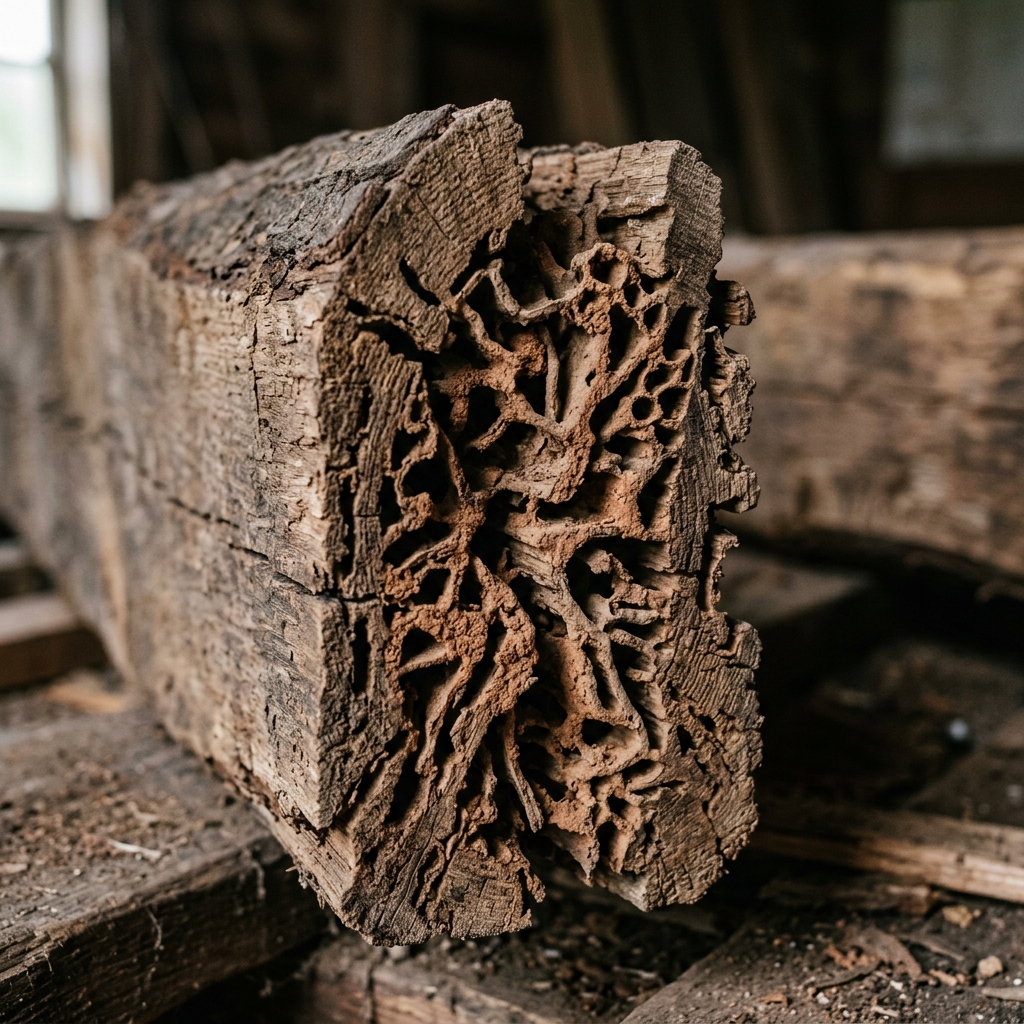
A split structural timber beam revealing a honeycomb network of internal galleries lined with mud, showing how termites consume timber from the inside out while leaving the surface intact.
Professional inspectors use specialized, non-invasive technology to see inside wall cavities without cutting them open:
- Thermal Imaging Cameras: These cameras display heat anomalies behind walls. Active termite nests produce metabolic heat and moisture, showing up as hot spots on a thermal scan.
- Moisture Meters: Since termites require high relative humidity, abnormally high moisture levels in plasterboard or wooden studs often highlight active pathways.
- Acoustic Sensors: Devices like the Termatrac system emit radar signals that bounce off moving termites, letting inspectors detect live movement inside a wall.
- Borescopes: Tiny cameras inserted through existing gaps or small drilled holes allow visual inspections inside inaccessible wall voids.
6. Termite Damage vs Wood Rot
Termite damage and wood rot (fungal decay) are often confused because both weaken structural timbers, leaving them spongy and unsafe. However, the root cause, appearance, and treatment methods are very different.
| Feature | Termite Damage | Fungal Wood Rot |
|---|---|---|
| Cause | Subterranean or drywood insects feeding on timber cellulose. | Fungi thriving on wood that is constantly wet due to leaks or damp. |
| Internal Texture | Hollowed-out, clean galleries that run along the wood grain. | Crumbles into tiny, dry cubic blocks (brown rot) or becomes soft, wet, and stringy (wet rot). |
| Presence of Soil | Tunnels are often packed with mud, saliva, and droppings (frass). | No soil or mud. Wood is dark, discoloured, and smells musty or mouldy. |
| Wood surface | Thin outer layer is left intact, hiding the hollow core. | Wood surface is visibly swollen, cracked, and rotting. |
It is also common to find both issues in the same place. The leaking plumbing that causes timber rot provides the damp environment subterranean termites need to survive, which makes resolving moisture problems a critical part of termite prevention.
7. Where Termites Commonly Hide
Termites prefer dark, moist environments close to the ground, though certain species can build nests high up in walls if they have a constant water source. The most common hiding spots in Australian properties include:
- Subfloor Spaces: Crawl spaces with suspended timber floors provide direct soil access, timber bearers, and joists. If ventilation is poor, moisture builds up and creates an ideal nesting site.
- Bathroom and Laundry Voids: Leaks behind shower recesses, baths, and laundry troughs provide constant moisture. Termites will build nests inside wall cavities directly adjacent to these wet areas.
- Roof Voids: Termites will travel up wall studs to feed on softwood roof trusses and rafters. This is particularly true for tree-nesting species like Coptotermes.
- Slab Penetrations: In concrete slab-on-ground homes, termites enter through expansion joints or tiny cracks around plumbing lines, completely bypassing exterior visibility.
- Exterior Gardens: Stored firewood, timber garden edging, tree stumps, and bark mulch piled against weep holes provide food sources and hidden bridges straight into the home.
8. What Happens During an Inspection?
A professional inspection is a systematic, hands-on check of all accessible structural elements. It typically takes 30 minutes to 2 hours, depending on the property's size and complexity.
During the inspection, the technician will go through several steps:
- Perimeter Assessment: The inspector checks the building's exterior foundation, brick weep holes, garden sleepers, fences, and nearby trees for mud tubes and nesting sites.
- Subfloor Check: The inspector crawls beneath the building to check concrete or wood piers, soil conditions, subfloor ventilation, and framing timbers.
- Interior Search: Using a sounding tool, the technician taps along skirting boards, window frames, door frames, and built-in cupboards to listen for hollow sounds.
- Roof Space Access: The inspector checks the roof rafters, trusses, and ceiling linings for mud packing or galleries.
- Thermal and Moisture Scans: Scanners are run across wet areas and suspect walls to check for thermal and moisture anomalies.
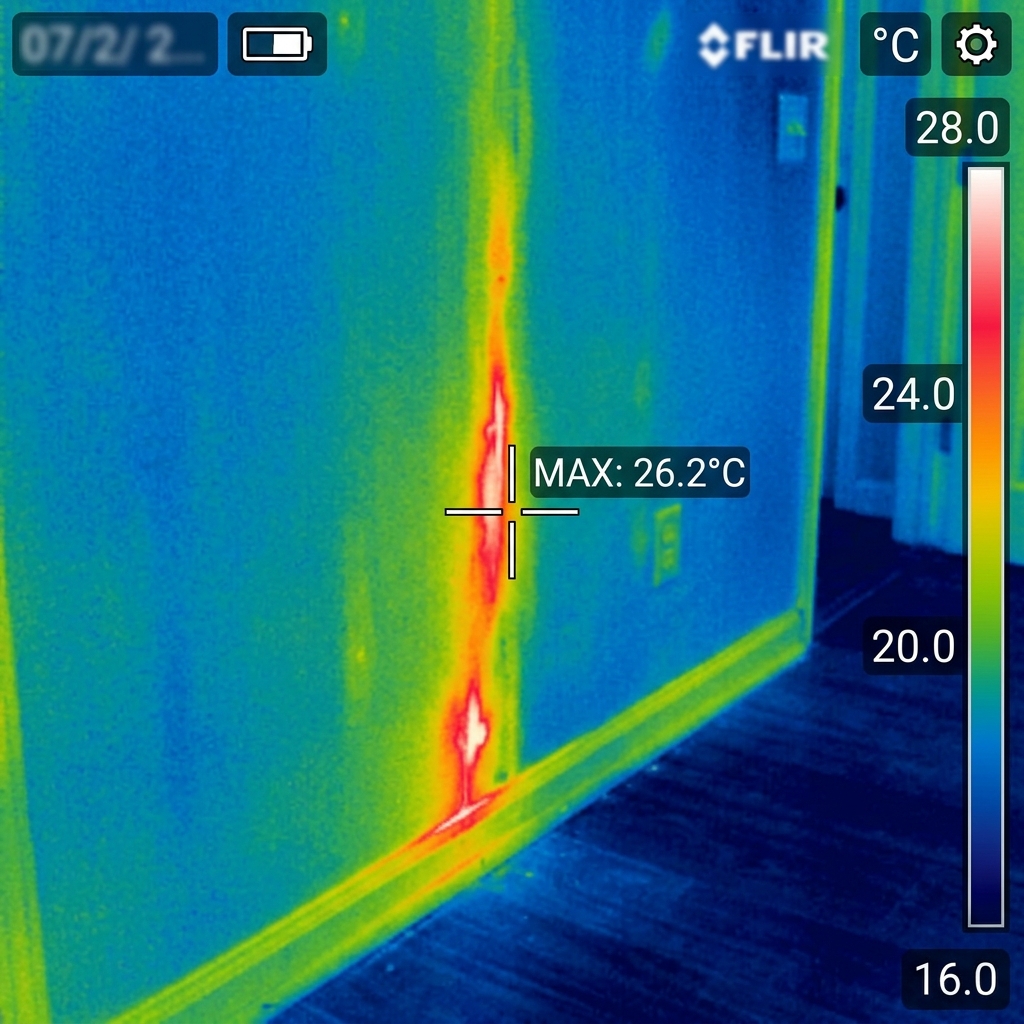
A thermal imaging display of an interior wall, where the bright red anomaly highlights the heat generated by a concealed termite nest inside the cavity.
9. Termite Inspection Costs in 2026
Average 2026 Termite Inspection Costs in Australia:
In 2026, a standard residential termite inspection in Australia costs between $250 and $450. Basic visual-only inspections cost $200 to $350, while thorough inspections using thermal imaging range from $350 to $600. Official pre-purchase timber pest reports compliant with AS 4349.3 generally cost $400 to $600, while commercial property rates start from $400.
Pricing varies based on several specific factors:
- Property Size: Larger multi-story homes or homes over 300 square metres take longer to check, adding $50 to $100 to the service.
- Accessibility: Properties with tight subfloors, steep roofs, or locked access hatches take more time to crawl, raising labor costs.
- Detection Technology: Inspections that include full thermal imaging, Termatrac radar, and moisture scans carry a premium of $100 to $200 but offer far greater detection accuracy.
- Geographic Location: Metropolitan centers like Sydney generally sit at the higher end of these pricing brackets due to higher business operating costs and elevated termite activity levels.
| Inspection Type | Typical 2026 Cost (AUD) |
|---|---|
| Basic Visual Inspection | $200 - $350 |
| Standard Residential Inspection (150-250 m²) | $250 - $450 |
| Advanced Inspection (Thermal Imaging Included) | $350 - $600 |
| Pre-Purchase Timber Pest Inspection (AS 4349.3) | $400 - $600 |
| Commercial Property Inspection | From $400 (based on size) |
Consider these fees against the cost of treatment and repairs. A single termite chemical barrier treatment in Australia ranges from $2,500 to $8,000, while major structural remediation work can easily cost $10,000 to over $100,000. Catching an infestation early can reduce treatment and repair costs by more than half.
Be wary of cheap quotes. A $99 inspection is often a quick walk-through that skips crawl spaces and roof voids. If an inspector misses active termites, the savings are wiped out by massive repair bills.
10. How Often Are Inspections Needed?
Recommended Inspection Frequency:
Australian Standard AS 3660 recommends a professional termite inspection at least once every 12 months. For properties located in high-risk regions (such as timbered, humid zones in Sydney) or properties with a history of prior termite activity, specialists recommend inspections every 6 months.
Termite barriers and chemical soil treatments are not permanent solutions. Chemical barriers can degrade, soil movement can shift the chemical zone, and home renovations or landscaping can easily bridge physical barrier shields. Annual inspections check the integrity of these barriers, which is also a requirement to keep product warranties active.
11. Pre-Purchase Termite Inspections
Skipping a pre-purchase timber pest check is a massive gamble when buying real estate. A home can look recently painted and structurally sound, but have severe termite damage hidden behind the plasterboard.
A pre-purchase timber pest inspection compliant with AS 4349.3 provides a legal assessment of the building. If active termites or structural damage are found, buyers can use the report to negotiate repair costs off the sale price or exit the contract under pest-clause terms.
12. Annual Termite Inspections
For existing property owners, an annual termite inspection is the most reliable way to catch problems early. During the check, the technician will look for changes around the property (like new garden beds, wood retaining walls, or new building extensions) that might have breached existing barrier systems.
13. Common Causes of Termite Infestations
Termites are attracted to properties that provide easy access to wood and high moisture levels. The most common conducive factors include:
- Concealed Wood-to-Soil Contact: Pergolas, fence posts, and wooden retaining walls built directly into soil allow termites to tunnel straight into the wood out of sight.
- Leaking Pipes and Bad Drainage: Dripping garden taps, leaking hot water relief valves, and blocked roof gutters keep foundation soil constantly damp.
- Obstructed Weep Holes: Concrete paving, garden beds, or landscaping mulch piled above the weep holes of a brick house allow termites to crawl in without crossing exposed brick.
- Poor Subfloor Ventilation: Blocked vents keep subfloor spaces damp and humid, creating an ideal environment for subterranean species like Coptotermes.
- Garden Food Sources: Stored firewood stacked directly against house walls or untreated wooden landscape sleepers drawing termites toward the building edge.
14. What a Report Includes
After the check, you will receive a detailed written report. For real estate buyers, this report will comply with AS 4349.3. The document should outline:
- Evidence of Active Termites: The species found, location of the activity, and estimated severity of the colony.
- Evidence of Past Activity: Previous mud tubes, damage, or evidence of old barrier treatments.
- Inaccessible Areas: Roof voids, subfloors, or locked rooms that could not be entered (this is critical because hidden damage could exist in these spots).
- Conducive Conditions: Moisture problems, timber-to-soil contact, blocked ventilation vents, and garden risks.
- Clear Recommendations: Steps to fix conducive conditions, recommended inspection frequency, and options for barrier treatment plans.
15. DIY vs Professional Inspections
Is a Professional Termite Inspection Worth It?
Yes, a professional termite inspection is absolutely worth it. While a DIY visual check is useful for spotting obvious garden issues, it cannot replace a professional assessment. Licensed technicians carry specialist moisture scanners, thermal imaging equipment, and radar motion sensors. They are trained in termite biology and building design, and carry professional indemnity insurance, whereas a missed infestation on a DIY check can result in over $100,000 in uncovered structural repairs.
16. Common Mistakes Homeowners Make
Avoid these common traps that can let termites gain a foothold:
- Assuming No Signs Means No Termites: Since termites eat wood from the inside, a lack of visible mud tubes or wings on the surface does not mean a property is clear.
- Spraying Termites with Off-the-Shelf Bug Spray: Spraying a few visible termites with standard ant spray does not hurt the nest. It only scares the colony, causing them to abandon that gallery and tunnel into another part of the house, making professional treatment harder.
- Disturbing Active Nests: If you uncover termites while renovating or gardening, leave them alone. Cover the area to keep it dark and humid, and call a professional immediately. Disturbing them causes them to retreat, making baiting treatments less effective.
- Neglecting Chemical Barrier Timelines: Chemical barriers degrade and require retreatment every 3 to 8 years depending on the chemical used. Leaving an expired barrier in place leaves the property vulnerable.
- Piling Stored Wood Against Walls: Firewood and timber scraps stacked against brickwork provide a direct path for termites to bridge over foundation barriers.
17. Termite Prevention Tips
While regular inspections are your best line of defence, you can reduce your property's risk by taking simple steps:
- Eliminate Wood-to-Soil Contact: Support pergolas, fence posts, and deck framing on galvanized steel posts or concrete stirrups above the ground.
- Fix Water Leaks Immediately: Repair leaking outdoor taps, hot water overflow lines, air conditioning lines, and damp bathroom walls.
- Redirect Stormwater: Make sure downpipes drain into stormwater lines and ground surfaces slope away from the concrete slab edge.
- Clear Subfloor Vents: Clear dirt, garden beds, and storage items away from crawl space vents to maintain dry airflow.
- Clear Garden Mulch: Keep garden mulch beds and soil at least 75mm below the weep holes and barrier inspection lines of brick walls.
- Remove Tree Stumps: Grind or chemically treat old tree stumps in the garden, as these are natural nesting spots for subterranean colonies.
18. Frequently Asked Questions
How much does a termite inspection cost?
How long does a termite inspection take?
Can termites be detected inside walls?
Do termites always leave visible signs?
Is termite damage covered by insurance?
How often should termite inspections be performed?
Are white ants dangerous to houses?
Conclusion and Next Steps
Termites are a constant threat to Australian properties. Because they work silently behind plasterboard and under floorboards, major structural damage can happen before you notice any warning signs. Since standard home insurance does not cover the repair bills, regular professional monitoring is the most reliable way to protect your investment.
By booking a professional inspection, you can identify active termites, assess previous damage, and find conducive conditions (such as moisture leaks and soil bridges) before they lead to expensive structural rebuilds.
Super Pest Controler provides certified, standards-compliant termite inspections across Sydney and surrounding suburbs. Using thermal imaging scanners and moisture detection technology, we provide full timber pest reports to safeguard your home.
Has it been more than 12 months since your last termite check? Contact Super Pest Controler today to schedule a detailed inspection and protect your property.