Possum Removal in Sydney: The Complete Homeowner's Guide
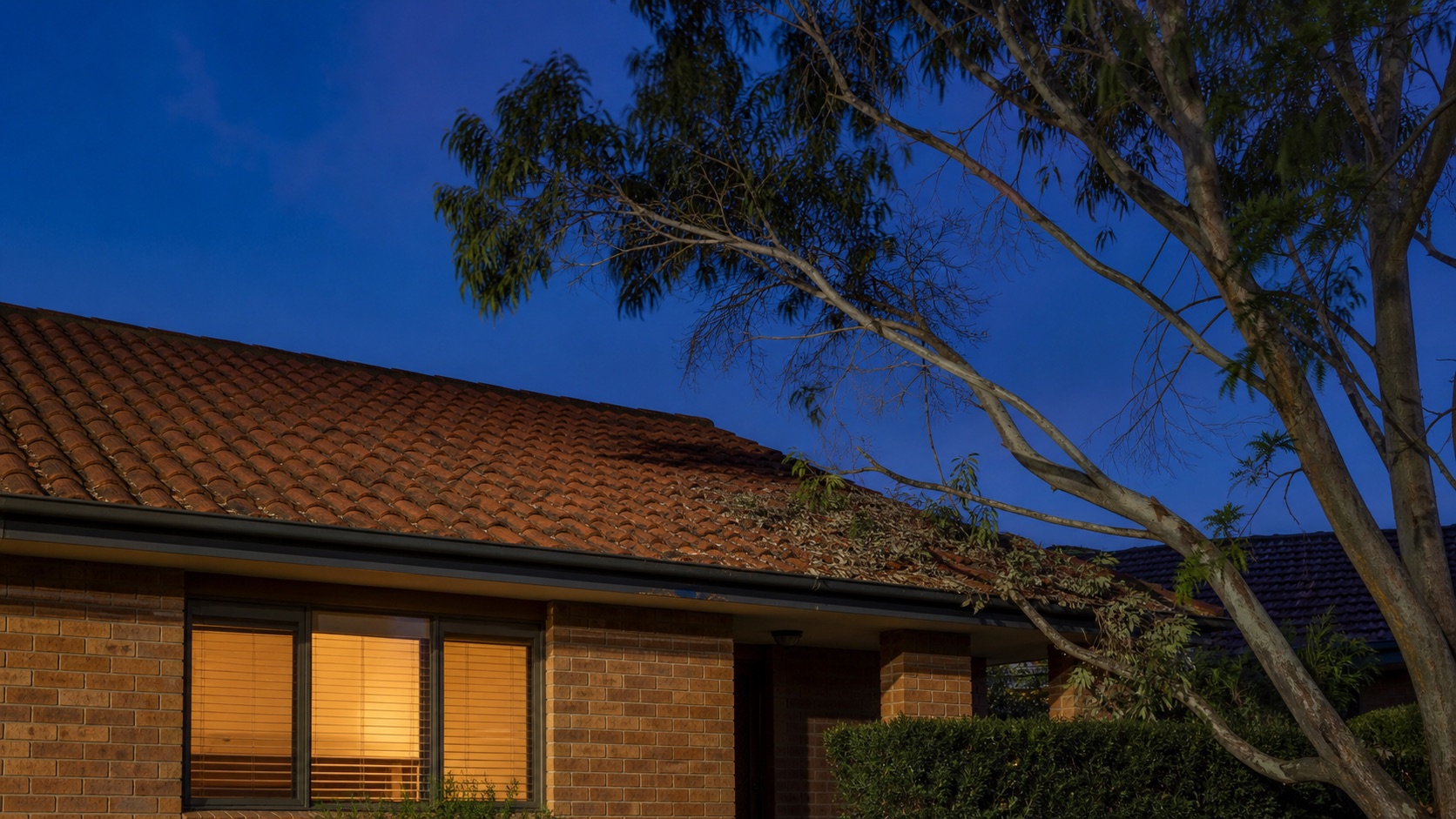
Something heavy is moving above your ceiling around ten at night, and by dawn it has gone quiet. If that sounds familiar, you probably have a possum in the roof, and in New South Wales that comes with rules most homeowners do not expect.
Quick answer
Possums are protected native animals in New South Wales, so catching one is legally treated as harm and requires a licence. A licensed handler must release the animal on the same property it was caught on, after sunset, within 150 metres of the capture point, and against something it can climb straight up. Nobody may lawfully move a possum to a park or bushland. Because the animal has to stay in its own territory, the part of the job that actually solves the problem is sealing the roof so it cannot get back in.
Is it actually a possum?
Start here, because the wrong diagnosis wastes money. Roof noise in Sydney comes from possums, rats, mice, birds and occasionally microbats, and each needs a different response.
Possums are nocturnal, so activity starts around dusk and stops near dawn. A common brushtail possum is roughly the size of a domestic cat, which is why the sound is heavy and deliberate rather than light and quick. Rodents produce fast scurrying and gnawing that continues through the night in short bursts.
Possum or rodent: how to tell from the noise and the evidence
| Clue | Possum | Rat or mouse |
|---|---|---|
| Sound | Heavy thumps, slow walking, dragging of nest material | Light, rapid scurrying and scratching |
| Vocal noise | Loud hissing, clicking, coughing and screeching, often two animals arguing | Faint squeaking, rarely audible from inside |
| Timing | Leaves at dusk, returns near dawn, quiet in between | Active in bursts all night |
| Droppings | Noticeably larger, often piled at one favoured spot | Small, scattered along travel routes |
| Entry gap | Large opening: lifted tiles, broken ridge capping, gap under eaves | Gap the width of a thumb or less |
| Smell | Ammonia-like urine odour, sometimes a musky scent mark | Musty, oily |
Two low-cost checks help confirm it. Scrunch newspaper loosely into any suspected opening: an animal using that route will push it aside on the way out at dusk. Or dust a thin layer of plain flour near the roof access hatch and look at the footprints in the morning. A cat-sized print settles the question.
If you want a second opinion before booking anything, stand outside about twenty minutes after sunset and watch the roofline. Possums are creatures of habit and usually leave by the same route at roughly the same time.
Brushtail or ringtail, and why it changes the plan
Two species turn up around Sydney homes, and they behave differently.
The common brushtail possum is the one in your roof. It is about the size of a house cat, with a pointed snout, pink nose, long whiskers, large ears and sharp climbing claws. In the bush it sleeps in tree hollows. Where hollows are scarce, a warm dry roof cavity is an excellent substitute. Brushtails are solitary and territorial, and they mark a home range using scent glands on the chest.
The common ringtail possum is smaller, with a tapered tail that curls into a ring and ends in a white tip. Ringtails are almost entirely tree dwelling and they build their own nest, a spherical bundle of shredded bark and grass called a drey, usually in a tree fork or dense shrub. Several may share one nest. Ringtails are far more likely to be in your hedge, your fruit tree or your roses than in your ceiling.
The practical consequence: if the animal is a ringtail in the garden, the answer is planting and fruit protection, not roof work. If it is a brushtail in the roof, the answer is exclusion plus proofing, and it needs to be handled inside the licence conditions below.
The signs that point to a possum in your roof
- Heavy movement across the ceiling that begins after dark and stops before sunrise
- Hissing, clicking, coughing or shrieking, sometimes with sudden scuffles
- A strong ammonia smell that gets worse in humid weather
- Brown staining spreading across a ceiling sheet, or a soft sagging patch
- Droppings and flattened, soiled insulation in one part of the roof cavity
- Scratched or scuffed timber near a lifted tile, a broken vent or a gap under the eaves
- Dragged leaves, bark or garden material near an opening
- Fruit disappearing overnight, chewed new growth on roses or vegetables
- A dog or cat fixated on one spot of ceiling at the same time each evening
One sign on its own is weak evidence. Three or more, with the timing pattern, is close to conclusive.
Why possums move into Sydney roofs
Brushtails are among the most successful urban marsupials in Australia, and Sydney gives them almost everything they need. Older suburbs have mature eucalypts and figs alongside houses, which puts a climbing route within reach of a gutter. Renovation, development and tree removal reduce the natural hollows they would otherwise use. Compost, fruit trees, vegetable beds, open bins and pet food supply the rest.
A roof cavity is drier, warmer and quieter than a tree hollow, and it is out of reach of dogs. From the possum's point of view it is an upgrade.
Entry is usually opportunistic rather than forced. The most common routes are:
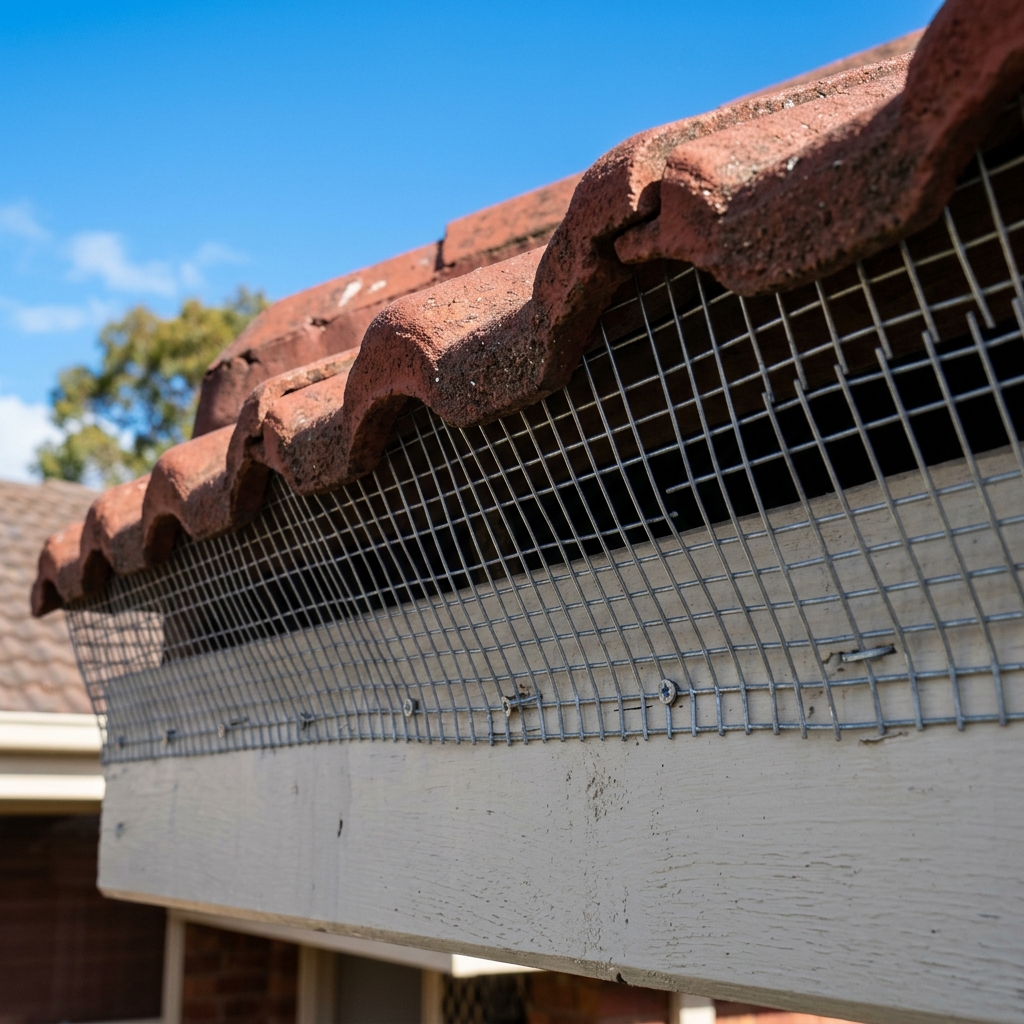
- Lifted or slipped roof tiles, and broken ridge capping
- Gaps where the roof meets a wall, a chimney or an extension of a different height
- Open or damaged eave vents, gable vents and whirlybird surrounds
- Gaps behind fascia and guttering, especially where the gutter has pulled away
- Rotten or split bargeboards and soffits
- Unscreened chimneys
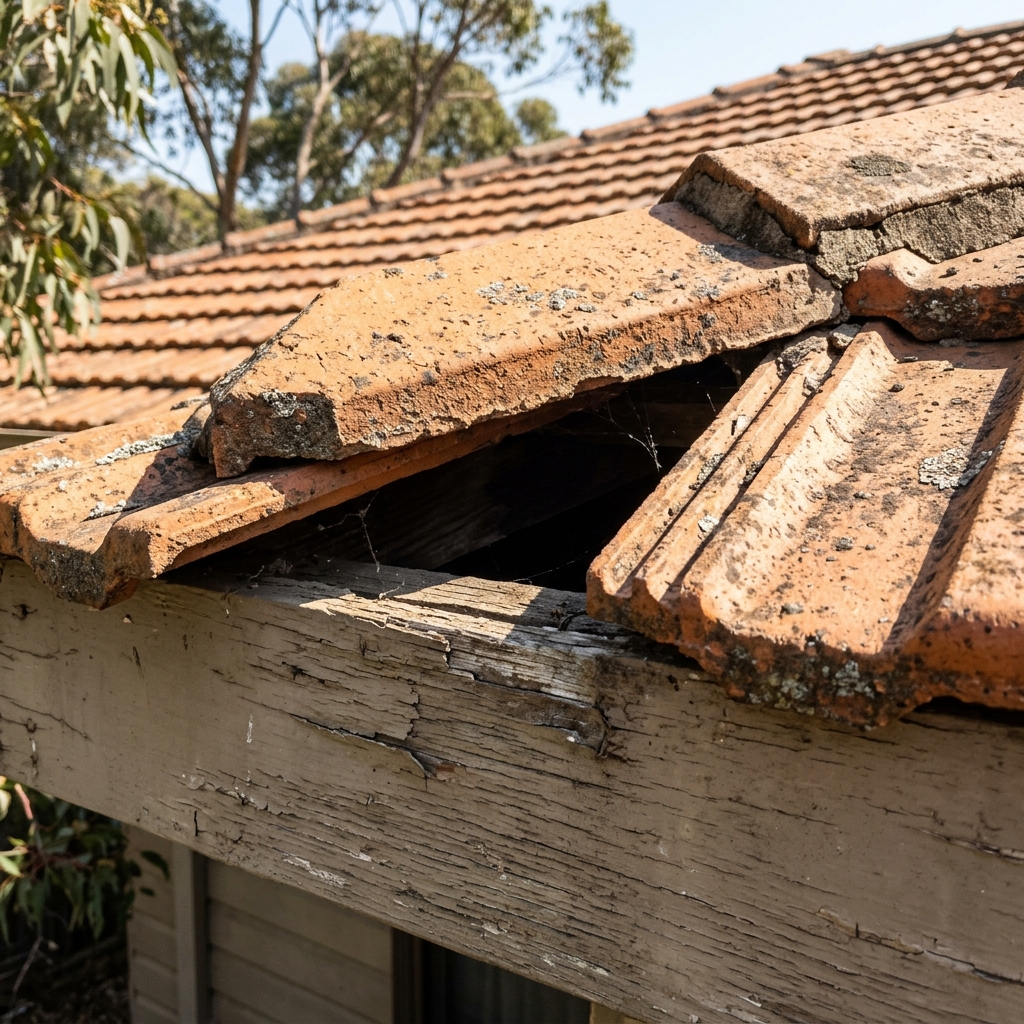
- Any branch, pergola, downpipe, cable run or fence line that reaches the roofline
Timing matters too. Brushtail young are usually born around May and June, so autumn and winter bring both cold weather and a female looking for a secure nesting space. Young animals dispersing to find their own territory add a second wave of activity.
What NSW law allows, and what it does not
All native mammals in New South Wales, possums included, are protected under the Biodiversity Conservation Act 2016. Under that Act, capturing a possum counts as harming it, which means you cannot lawfully trap one without a licence, even in your own roof.
There are two lawful routes.
- Engage a licensed commercial operator. A business holding a current catch and release possum licence can remove the animal from your premises, and you do not need to apply for anything yourself.
- Apply for a landholder's licence to harm native protected animals. As the property owner or manager you can apply to National Parks and Wildlife Service and nominate who will do the catching and releasing. These are granted case by case, and a fee applies.
It is not legal to kill or injure a possum, to use poison or a lethal trap, or to take the animal away and let it go somewhere else. Relocation away from the property is the misconception that causes the most trouble. Possums are territorial, and the department's position is blunt about it: research shows that releasing a possum too far from where it was caught, including in a local park, greatly reduces its chance of survival. The NSW possum management policy also makes the practical point that a possum removed from a roof will simply be replaced by another one unless the roof is repaired.
The conditions a licensed handler works under
The published NSW licence conditions are specific. A licensed handler must:
- Catch the animal alive in a cage trap of at least 30 centimetres by 30 centimetres. Lethal traps, leg snares and poison of any kind are prohibited
- Check every cage each day between 5am and 10am, and never leave an animal caged for more than 24 hours
- Provide food and water while the animal is caged, and move the cage with adequate ventilation and protection from wind, rain and temperature extremes
- Cover the cage with a permeable material when carrying the animal out of a roof cavity
- Release the animal unharmed, after sunset, on the property where it was caught, and within 150 metres of the capture point
- Release it against a structure it can climb immediately, and not in a place where injury or death is likely
- Make a reasonable effort to have the roof cavity sealed before release, after checking that no animals remain inside
- Keep records of every animal handled and produce them to National Parks and Wildlife Service on request
Read that list again with a quote in front of you. It tells you what a compliant job looks like, and it explains why a same-hour "take it away" service is not a thing that legally exists.
How to check that a possum handler is licensed
You do not have to take anyone's word for it. Two straightforward checks:
- Ask for the licence. A commercial catch and release possum licence names the licensee and the authorised persons who may handle animals under it. Ask which named person will attend your property.
- Check the published list. The Department of Climate Change, Energy, the Environment and Water publishes contact details for licensed catch and release possum handlers by region, including a Sydney section. Inclusion is voluntary, so a good operator may not appear on it, but a listing is useful confirmation.
If a provider will not answer a direct question about their licence, that answers a different question for you.
How a possum is removed from a Sydney roof, step by step
A competent job runs in this order. If a quote skips step 5, you are buying a temporary result.
- Inspection. Roof cavity, roofline, eaves, chimney and surrounding vegetation. The aim is to confirm the species, count the animals, find every possible entry point rather than just the obvious one, and identify any dependent young.
- Diagnosis of the route. Confirming which opening is actually in use, usually by observation at dusk or by physical evidence such as rub marks, hair and worn edges.
- Alternative shelter. Fitting a nest box in a suitable tree, high enough to be out of reach of cats and dogs, gives the animal somewhere to go. This is what turns an eviction into a relocation the animal will accept. A resident possum holding a box in your yard also discourages others from moving in.
- Exclusion or trapping. Either a one-way device that lets the animal out but not back in, or cage trapping and release under licence. Which one suits depends on access, the number of animals and the season.
- Proofing and repair. Permanently closing every entry point in materials the animal cannot defeat.
- Cleanup. Removing soiled insulation and nesting material, then treating the area to reduce odour and scent marking.
- Verification. A follow-up check to confirm no activity has resumed, and a plan if it has.
One-way doors and exclusion
A one-way door is fitted over the entry point the animal is using. The possum leaves at dusk to forage as it always does and cannot get back in at dawn, so it moves to the nest box or another site inside its own territory. Nothing is caught, nothing is handled, and the animal is not stressed by confinement.
Exclusion only works when the survey was thorough. Possums frequently use more than one route, and a single missed gap makes the whole exercise pointless. It is also the wrong approach if there is any chance of dependent young in the cavity, because the mother would be locked out from them.
Trapping under licence
Cage trapping is appropriate where a one-way device cannot be fitted, where the animal will not use the exit route, or where the roof needs to be opened up for repairs. It is more intrusive, it is bound by every condition listed above, and it has to be worked around the daily cage-check requirement. Trapping without sealing the roof afterwards achieves close to nothing, because the vacated territory is attractive to the next possum.
Proofing, which is the part that actually fixes it
Proofing is where most of the labour, most of the materials and most of the value sit. Done properly it means:
- Replacing broken tiles and rebedding or repointing ridge capping
- Replacing rotten timber rather than patching over it
- Screening vents, chimneys and whirlybird surrounds with material that resists claws
- Closing gaps at roof junctions, behind fascia and around guttering
- Fixing everything mechanically, with fasteners and sealant that survive weather and prying
Chicken wire is a common shortcut and a poor one. A determined possum can pull light wire away with its claws. Solid sheeting, timber or heavy gauge mesh, properly fixed, is what holds.
Timing matters more than most people expect
This is the detail that separates a good operator from a fast one.
Brushtail possum young are usually born in May and June after a very short pregnancy of around 17 days. The joey then spends roughly five months in the pouch, followed by about two more months riding on its mother's back before it becomes independent at around seven months old. That means a female may have young that cannot survive without her for a large part of the year.
If a mother is excluded from a roof while dependent young are still inside, the young will die there. That is a welfare failure, it puts the operator offside with their licence conditions, and it leaves you with a decomposition and odour problem inside a ceiling that is much harder and more expensive to fix than the original issue.
The published licence conditions require a handler to check that no animals remain in the cavity before sealing. In practice, during the breeding months, that means a careful inspection, sometimes a short delay, and sometimes staged work. If someone offers to seal your roof the same afternoon in the middle of winter without inspecting the cavity first, treat that as a warning sign rather than good service.
What you can legally do yourself
Plenty, as long as you do not catch, handle or harm the animal.
- Find the entry point. Watch the roofline at dusk, or use the newspaper test described earlier.
- Make the roof less appealing. Wildlife rescue groups suggest placing a light in the roof cavity and leaving it on for several days and nights, since possums prefer to sleep in the dark. It is not a guaranteed fix, but it costs almost nothing.
- Provide an alternative. Mount a sturdy, weatherproof possum box in a tree for a brushtail, high enough to be out of reach of cats and dogs. Putting a piece of apple or pear nearby encourages the animal to investigate it.
- Cut the access route. Trim or remove branches that touch or overhang the roof. Two to three metres of clearance is a reasonable target where the tree allows it.
- Seal the opening once you are certain the animal is out. Do this at night while it is out foraging, using solid material, and only after checking that nothing else is inside.
- Remove the food. Secure bins, pick up fallen fruit, cover compost, bring pet food in overnight, and net fruit trees and vegetable beds.
- Stop feeding possums. It is well intentioned and it makes the problem permanent.
What not to do
- Do not trap without a licence. Catching a possum is harming a protected animal under NSW law.
- Do not use poison or bait of any kind. It is prohibited, and a dead animal inside a ceiling is a far worse problem than a live one.
- Do not drive it somewhere else. Releasing a possum away from its territory is unlawful and usually fatal for the animal.
- Do not seal an entry point until you are sure the cavity is empty. In autumn and winter especially, assume young may be present until an inspection says otherwise.
- Do not rely on smoke, water or noise to force an animal out. It causes panic, and a panicked possum in a ceiling can injure itself and cause more damage.
- Do not trap without repairing. The territory does not stay empty.
- Do not go into a roof cavity without thinking it through. Poor lighting, exposed wiring, insulation, brittle ceiling battens and a cornered animal are a bad combination.
Damage, mess and health risk
The everyday costs of a possum in the roof are structural and hygienic rather than dramatic.
Property damage. Urine and droppings accumulate in one favoured area, soak into insulation, and eventually stain and weaken plasterboard. Insulation gets flattened and soiled, which reduces its thermal performance. Nest material is dragged in. Timber gets scratched at entry points. Where cabling is chewed or its insulation is damaged, that is an electrical hazard: have a licensed electrician inspect it rather than assessing it yourself.
Odour and repeat visits. Brushtails scent mark with glands on the chest, and those marks plus urine leave a signal that draws other possums to the same opening. That is why proper cleanup is part of a lasting fix rather than a cosmetic extra.
Sleep and stress. Not a trivial item. Weeks of broken sleep is usually the reason people finally call someone.
Health. Keep this in proportion. Possums rarely make contact with people, and bites are almost always the result of someone trying to pick one up or blocking its escape. The realistic risk is contact with accumulated urine and droppings while cleaning up. NSW Health notes that many different animals can carry Leptospira bacteria, which are shed in urine and typically enter the body through cuts or grazes, or through the lining of the mouth, nose and eyes. Australian leptospirosis cases are concentrated in the wetter tropics and subtropics rather than urban Sydney, so treat this as a reason to wear gloves rather than a reason to panic. Accumulated droppings and damp nesting material can also produce dust and odour that irritate people with asthma or allergies.
Cleaning up safely
If you are handling the cleanup yourself:
- Wear disposable gloves, a P2 mask, long sleeves and eye protection
- Lightly dampen dry droppings before removing them, so you are not raising dust
- Bag soiled insulation and nesting material and dispose of it, rather than trying to salvage it
- Ventilate the space while you work and while it dries
- Wash and dry your hands and forearms thoroughly afterwards, and wash your clothes separately
- Cover any cut or graze on your hands and arms before you start, and see a doctor if you develop a fever in the days after
- If the contamination is extensive, or if it is above a bedroom or a kitchen, get it done professionally
What shapes the cost of possum removal in Sydney
Published price ranges for possum work vary so widely that they are close to useless as a guide, and several of the pages carrying them contain legal errors. What is more useful is understanding what a real quote is made of, so you can compare two of them properly.
Cost drivers, in rough order of impact:
- The amount of proofing and repair. One clean opening is a small job. A tile roof with failing ridge capping, four viable entry points and rotten bargeboards is a roofing job with a possum in it.
- Roof access and pitch. Two-storey, steep, tiled, heritage or slate roofs need more time, more equipment and more care. So do cavities with a single tight hatch.
- Number of animals and the season. More animals means more time. Suspected dependent young means staged work and return visits.
- Whether cleanup is included. Removing and replacing soiled insulation is a separate scope of work from removing the animal.
- Return visits. One-way doors and cage traps both require the operator to come back.
- Species and location on the property. A ringtail in a garden hedge is a different job from a brushtail in a ceiling void.
- Materials. Heavy mesh, sheeting, replacement tiles, timber, sealant and a nest box all cost money.
Questions to ask before you accept a quote
- Who holds the catch and release possum licence, and which named authorised person is attending?
- Does the price include proofing all entry points, or only removing the animal?
- How many entry points did the inspection find, and where are they?
- What materials will be used to seal them, and are they fixed mechanically?
- What happens if the animal gets back in, and for how long does that apply?
- Is roof cavity cleanup included, or quoted separately?
- How will you confirm no young are present before sealing?
- Is a follow-up inspection included?
- Is the quote itemised, and are return visits already in the price?
A quote that answers all nine in writing is worth more than a cheaper one that answers three.
Keeping possums out for good
Removal is the short-term fix. These are what stop it happening again.
The roof itself. Get the whole roofline checked once a year, ideally before autumn. Replace broken tiles, repoint failed ridge capping, replace rotten timber, screen vents and chimneys, and close gaps at every roof junction. This is unglamorous maintenance and it is the entire answer.
The approach routes. Keep branches trimmed back from the roof. Where a tree cannot be cut back enough, a smooth collar around the trunk can make it harder to climb. Check pergolas, downpipes, cables, trellises and fence lines that run to the roofline. Fitted gutter guard removes the gutter as a walking route and reduces leaf build-up at the same time.
Food and water. Secure bins, cover compost, pick up windfall fruit, net fruit trees and vegetable beds, bring pet food and water bowls in overnight.
Give them somewhere better. A well-placed nest box gives a displaced possum a legitimate home inside its own territory. A resident possum that has claimed your yard also deters others, which is a more durable outcome than an empty territory that the next animal will fill.
Deterrents, honestly. Light in the roof cavity has a reasonable practical basis, because possums prefer to sleep in the dark. Scent-based products such as quassia chips, garlic or naphthalene are widely suggested and results are inconsistent. Never combine multiple chemical products in a confined roof space. Ultrasonic devices are heavily marketed and the evidence for lasting effect on possums is weak. None of these substitutes for closing the hole.
Apartments, terraces, strata and commercial buildings
If you live in a Sydney strata scheme, the roof is almost always common property, which changes who arranges and pays for the work.
Under section 106 of the Strata Schemes Management Act 2015 (NSW), the owners corporation must properly maintain the common property and keep it in a state of good and serviceable repair. Since possum entry is normally the result of a defect in the roof, the ridge capping, the eaves or the fascia, the repair and proofing side of the job usually sits with the owners corporation rather than the individual lot owner.
Practical steps for strata residents:
- Report it to the strata manager or committee in writing, with dates, times and the noise pattern
- Ask for a roof inspection covering the whole building, not just the void above your lot
- Push for proofing across the roofline. Sealing one apartment's entry point tends to move the animal along the cavity rather than out of it
- Keep records. A defect that was reported and left unrepaired matters if damage follows
- Check your own by-laws and any common property memorandum, because schemes can allocate responsibility differently
For commercial buildings, warehouses, schools, childcare centres and food premises, add two considerations: the hygiene and audit implications of animal waste on site, and the need to schedule roof work around occupancy. Multi-tenanted sites need a whole-of-roof plan for the same reason strata buildings do.
When to call a professional, and when to call a wildlife rescue
Call a licensed possum removal operator when:
- The animal is in a roof cavity or wall and you cannot identify how it is getting in
- You have found the opening but cannot safely reach or repair it
- There is more than one animal, or you suspect dependent young
- It is the breeding season and you want the sequencing done correctly
- There is significant soiling, staining or damage in the cavity
- You have already sealed one gap and the noise came back
- The building is strata titled or commercial and the work needs to cover the whole roof
- You want the work documented, warranted and done inside the licence conditions
Call a wildlife rescue group instead when the animal is sick, injured, orphaned or trapped and distressed. In Sydney, WIRES on 1300 094 737 and Sydney Wildlife Rescue on 02 9413 4300 take these calls. A joey on its own, an animal that has been hit by a car or caught by a dog, or a possum stuck inside a wall is a rescue matter, not a pest control one.
One thing to expect: your council will not remove a possum from private property. Councils publish guidance and refer residents to wildlife groups or licensed handlers, but the removal itself is the property owner's responsibility.
Book a possum inspection with Super Pest Controler
If there is something moving in your roof, the useful next step is an inspection that identifies the species, finds every entry point and tells you exactly what the repair involves. That is what a quote should be built on.
Super Pest Controler provides possum inspections, exclusion planning, roof proofing, repairs and cleanup for homes, strata buildings and commercial properties across Greater Sydney and surrounding suburbs. Where trapping and release are required, confirm that the work is handled by a current NSW catch and release possum licensee.
Common questions
Frequently asked questions
Clear answers to the legal, practical and property questions Sydney homeowners ask most often.
NSW law and licensing
What is permitted, prohibited and handled by local authorities.
Is it illegal to trap a possum in NSW?
Without a licence, yes. Possums are protected under the Biodiversity Conservation Act 2016, and capturing one is treated as harming it. You can either engage a licensed commercial operator or apply for a landholder's licence to harm native protected animals and nominate who will do the work.
Can a possum be relocated to a park or bushland?
No. A possum caught under licence must be released after sunset on the same property, within 150 metres of the capture point, against a structure it can climb. Possums are territorial, and the department's position is that releasing them too far from the capture site greatly reduces survival.
Can I use poison or bait to get rid of possums?
No. Poison of any kind is prohibited for use on possums, and a dead animal inside a ceiling creates an odour and hygiene problem that is far worse and far more expensive than the original one.
Will the council remove a possum for free?
No. Councils are not responsible for removing possums from private property. They provide information and refer residents to wildlife rescue organisations or licensed handlers.
Removal and prevention
Timelines, deterrents and signs that the roof is secure.
Will a possum leave the roof on its own?
Not reliably. A roof cavity is warmer, drier and safer than most alternatives, so an animal that has claimed one tends to stay while it can get in. Even if it does leave, the vacant space attracts the next possum unless the opening is sealed.
How long does possum removal take?
The inspection is usually a single visit. Exclusion or trapping typically takes several days, because a one-way door needs a night or more to work and a cage trap has to be checked daily. Proofing and repair time depends on how many entry points there are and how much of the roof needs work.
Do possum repellents and ultrasonic devices work?
Light in the roof cavity has a sensible basis, since possums prefer dark sleeping sites, and it is worth trying. Scent products give inconsistent results, and never mix multiple chemical products in an enclosed roof space. Evidence for ultrasonic devices having a lasting effect on possums is weak. None of them replaces sealing the entry point.
How do I know the removal actually worked?
Silence for several consecutive nights is the first signal. A proper check goes further: reinspect the cavity for fresh droppings and disturbed insulation, confirm every sealed point is still intact, and watch the roofline at dusk for a few evenings. A follow-up inspection should be part of the job.
Safety and property
Practical guidance for homes, insurance and strata buildings.
What should I do if a possum gets inside the house?
Stay calm and give it a way out. Close internal doors, open an external door or window, turn off bright lights in that room, keep pets and children away, and let it leave on its own. Do not corner it or try to catch it. If it is stuck somewhere it cannot escape from, call a wildlife rescue group.
Who is responsible for possum removal in a strata building?
The roof is normally common property, and under section 106 of the Strata Schemes Management Act 2015 the owners corporation must keep common property in good repair. That usually makes the roof repair and proofing an owners corporation matter. Report it in writing and check your scheme's by-laws, since responsibility can be allocated differently.
Does home insurance cover possum damage?
It depends entirely on the policy. Many home policies exclude damage caused by animals, vermin or gradual deterioration, while some cover resulting damage such as water ingress through a hole. Read the product disclosure statement and ask your insurer before you assume either way.
Are possums dangerous?
Not in normal circumstances. They avoid people and would rather leave than confront you. Bites and scratches almost always happen when someone tries to handle one or blocks its escape route. The realistic risk is hygiene related, from contact with accumulated urine and droppings during cleanup.
The short version
If the noise starts at dusk and stops at dawn and sounds heavy, it is almost certainly a brushtail possum, and it is a protected animal. Anyone who offers to trap it and take it away is offering something they cannot lawfully do. The animal has to stay in its own territory, which means the fix is getting it out of the cavity properly, giving it somewhere else to sleep, and closing the roof so it cannot return. Ask about the licence, ask what the quote covers besides catching the animal, and ask how they will check for young before sealing anything. Those three questions will tell you most of what you need to know about who you are hiring.